Every human face is a gorgeously unique thing, but its skin type can probably be classified in one of only a few ways—dry, oily, combination. But there’s another skin type that all faces have in common: Aging skin.
If you have aging skin, congratulations! You are a healthy, living human being. Aging is simply a part of life. Some experts say that aging skin begins to reveal itself in a person’s late 20s. Short of plastic surgery, there is little that can be done to reverse the process. It’s easier, and less expensive, to simply embrace aging skin as one of the many textures of one’s life, a fabric that reveals its beauty over time.
In Japan, age is viewed as a gift, garnering respect and even status; such a position is something to look forward to, instead of dreading. But like any skin type, it’s important to understand the specific needs of aging skin.
What is aging skin?
The natural aging process is aggravated by various factors, but what happens on a microscopic level remains the same throughout all parts of the body. Because uncontrolled cell reproduction can be dangerous, our chromosomes are outfitted with sequences called “telomeres” that shorten over time. When a telomere disappears, its associated cell reaches the end of its line, and ceases to reproduce.
A few behaviors and metabolic processes can accelerate this process in the skin, according to an article in Experimental Dermatology. The process becomes visible when collagen and elastin proteins begin to decrease in number, resulting in a gradual loss of structural and functional integrity—skin-slackening, wrinkles, dryness, hyperpigmentation are all attendant signs of aging skin.
Types of Aging Skin
An article in the journal Cell Transplantation distinguishes between two types of aging in the skin: Extrinsic aging and intrinsic aging.
Extrinsic aging occurs due to the environment around us. Skin, the body’s largest organ, is also the organ most exposed to the outside world—a fact which also describes skin’s primary function as a barrier. Our skin is quite thin, ranging from less than half a millimeter in some places (like on the eyelids) and thicker in others, like on our palms and heels. According to one study, skin thickness varies according to factors like pigmentation (darker skin can be thicker) and gender (women's skin is marginally more delicate than men’s). Extrinsic aging can be caused by gravity, ultraviolet rays, or pollutants that cause oxidative reactions in skin cells.
Intrinsic aging occurs due to metabolic reactions within our body. If extrinsic factors caused aging alone, the skin we cover with clothing would age more slowly than the skin left uncovered. There’s no complicated description of what happens here: As we get older, our bodies become less adept at repairing themselves, and structural proteins like collagen that are naturally lost can’t be replenished as quickly. Sometimes, free radicals within the body can cause additional damage. A good antioxidant defense can help against this type of intrinsic aging, but we’ll get to that in a moment.
Signs of Aging Skin
Indeed, all skin is aging skin. But age can be a distinct cause of more than a few different skin issues.
Fine lines and wrinkles: According to the Cleveland Clinic, fine lines appear first and become wrinkles as we age. Fine lines and wrinkles happen to all of us, often from actions like smiling that show we are embracing the joys of life, but they can be accelerated or aggravated by extrinsic factors like repeated contractions (like crow’s feet around the eyes, which appear where we squint) or intrinsic factors like aging. It’s not possible to iron back out a wrinkle or fine line once its formed, but products that boost cell turnover—a retinol or retinol alternative, like Tatcha’s Silk Serum that is clinically proven to show improvement in the look of fine lines and wrinkles—can help.
Slackening and loss of elasticity: If you notice your skin hangs a little more than it used to, or you wake up in the morning with a face full of pillow marks, your skin may be less taut than it once was, which is a natural symptom of aging skin.
Dryness: We become less hydrated as we age. This occurs throughout the body, including in our largest organ. Dehydration in the skin can cause many problems, from acne to scaly texture. Moisture restoring products, like essences or moisturizers, can help your skin hold on to hydration.
Hyperpigmentation: Certainly you’ve heard of age spots, which are the same as sun spots—a darkening of the skin due to sun exposure that can become more serious as we get older. Though they are more likely to appear in those of advanced age, they are caused by ultraviolet rays. Whether it’s chemical or physical, it’s critical to wear sunscreen every day, no matter your age.
Skincare for Aging Skin
Aging skin comes with its own unique set of needs. But caring for aging skin shouldn’t require a total routine overhaul—just a few special considerations.
- Hydration is key. The first step is facing the fact that your skin doesn’t hold on to moisture as well as it once did. Make sure you use a moisturizer or serum that incorporates water-binding ingredients called humectants, like hyaluronic acid.
- Take care of your collagen. Collagen production takes a hit as we get older, so ingredients that facilitate collagen production—like retinol or its alternatives—help keep skin structure intact.
- Sunscreen, always. Once you can see sun damage, it’s usually there to stay. Avoid it entirely by adopting strict usage. A formula’s sun protection factor, or SPF, indicates its sun safety. The Skin Cancer Foundation recommends sunscreens that start at SPF 15, while SPF 50 provides some of the best protection on the market.
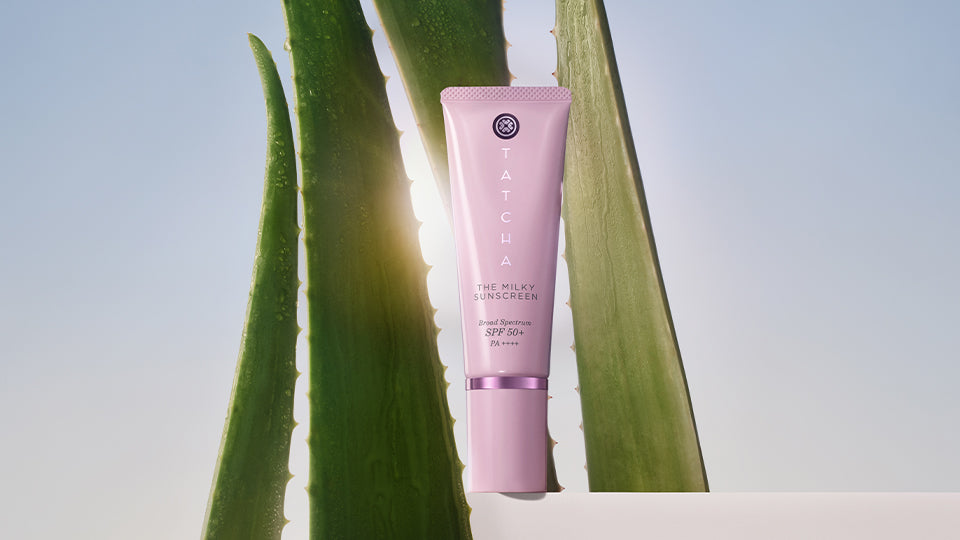
It’s not difficult to find products that achieve more than one of these goals at the same time. Tatcha’s Silk Sunscreen, for example, is SPF 50 and made with hyaluronic acid. The Ageless Revitalizing Eye Cream is also made with super-hydrating hyaluronic acid, as well as Tatcha’s proprietary skin-nourishing trio of superfoods, Hadasei-3™. A multitasking product can help simplify your skincare regimen. Remember that aging is a gift, which means wrinkles and dryness are, too. Take a moment to cherish it. Then, give your skin the care it deserves.