They say that trends are cyclical—and everything comes back. It’s true from fashion to food. The things that are in today, be they bellbottom jeans or pastel macaroons, fall out of favor and then back in. Changes to the way we communicate, like the internet and social media, have only made these trend cycles spin faster and faster, leading to fad aesthetics that last no more than a couple of months.
Then there are other trends—the ones that stay a little longer. “Slugging”, for one example from the beautysphere, became popular on Instagram and TikTok towards the end of 2022, and describes the final skincare flourish of layering one’s face in petroleum jelly for an overnight mask. The trend has roots in Korean skincare, but dermatologists pointed out that petroleum jelly has been used as a mega moisturizer for about as long as it's been around. Some even recommend the trend, though it’s better suited for dry than acne-prone skin.
Trends come from all sorts of places, and we only tend to hear about them at their peak. Some trends are refined from ancient wisdom or specific traditions that reemerge into contemporary culture. As beauty becomes more popular than ever, there is a constant feed of new trends—from “clean girl” to “Strawberry skin”—that quickly flame out, as well as trends that seem new but have actually been around for awhile. At Tatcha, we take much of our inspiration from Japanese beauty trends, paying special attention to those that have centuries-old roots. Here are a couple of these trends that don’t seem to be going anywhere any time soon.
Heirloom advice: Techniques from olden days
Some of our earliest beauty wisdom is inherited; from our parents, guardians, siblings, or those around us. But what if we looked even farther back? That is how Tatcha’s founder, Vicky Tsai, came across the skincare rituals of geisha and maiko performers, for whom beauty was not just a veil or veneer, but a philosophy and way of life.
When a colleague showed Tsai a copy of the “Capital Beauty and Style Handbook,” a three-volume text documenting the fashion and beauty routines of 18th century Japan, she was transfixed by some of its timeless (and less timeless) advice. An exfoliant of nightingale droppings would, if made today, be unlikely to catch on. But other ingredients caught her eye, like rice bran and camellia oil, which respectively could be used as an exfoliant and moisturizer.
These recommendations helped inspire a two-part skincare ritual known as the double cleanse, or the Kyoto Cleanse. Step one is the Camellia Cleansing Oil, capable of melting even thick performance makeup, and step two is the Rice Polish, which uses a finely-milled bran to cleanse and exfoliate. Used in tandem, these formulas use a little ancestral know-how to produce silk-soft, smooth skin.
Protect, protect!: The Importance of SPF
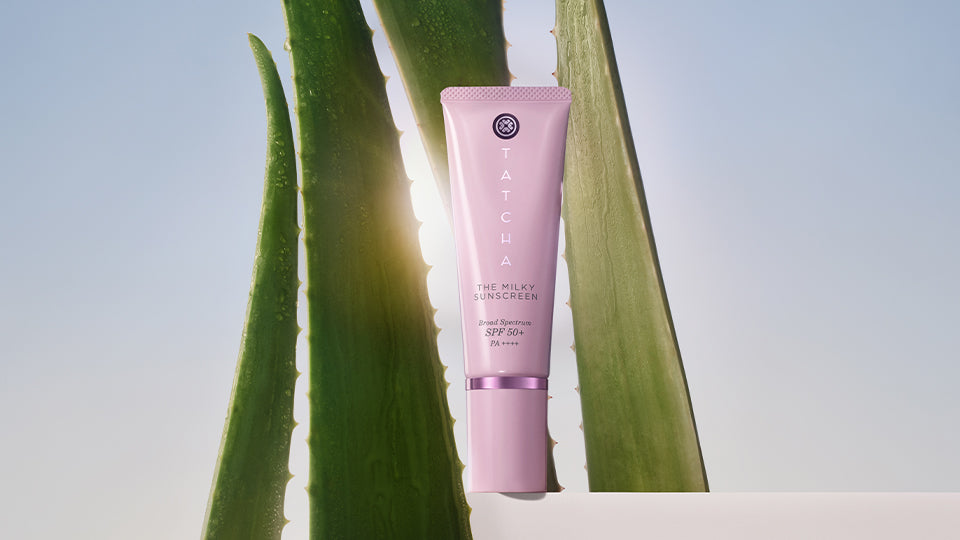
There may be no beauty product as important to Japanese women than sunscreen. The geisha performers of yore used parasols and thick, mineral oshiroi makeup that protected their faces from the sun. In modern day Japan, oshiroi is far less common, but Japanese women are diligent in protecting their skin from the sun without sunscreen, even as teens—wielding parasols on their walks to work, and covering exposed skin with hats, visors, gloves, sunglasses, even leggings.
It’s no wonder why: Not only is sunburn unpleasant and even dangerous, but UV light is a main cause of skin aging—about 90% of visible wrinkles and spots, according to the Cleveland Clinic, form due to sun overexposure. In fact, sunscreen is one of the best anti-aging products there is. Which is why you should always have one. The best face sunscreen should be tailored to your skin type, and it’s a good idea to wear sunscreen every day, wherever skin may be exposed: on your body, on your hands, even on your lips. You’ll be able to see the results pay off in time.
Shades of nature: Color products with buildable textures
Makeup is worn all throughout Japan, and has been for centuries. Even as early as the Edo period, in the 17th century, women were instructed on makeup application, and cosmetics became an important part of presentation. Even today, Japanese makeup is prized throughout the world, and exists in a nearly endless variety of colors, textures, and ways to wear.
A prevailing makeup trend involves soft, natural colors for the lips and cheeks that can be intensified according to the wearer’s preference: One layer for a wash of color, a few more for something more dramatic. Far from your statement makeup products, they’re made to accessorize your own beauty—not overpower it. Tatcha’s Kissu Lip Tint SPF 25 captures the trend with a small wardrobe of lip colors, each inspired by a prized Japanese petal, from the coral pink ume to the punch red tsubaki. Each color’s buildability gives it many ways to wear.
Earth to skin: Time-tested active botanicals
Many aspects of Japanese culture tie back to a deep and abiding respect for the world around us. Shintoism beholds nature as something like divinity itself, and across Japan many communities’ cultures are highly entrenched in their local surroundings. The nation is home to an abundance of climates, flora, and fauna; celebrating these things never goes out of style.
There are cuisines made entirely of only-local ingredients, and festivals for every shade of flower petal; it follows that many Japanese beauty trends would prioritize botanicals important to Japanese culture. Over time and testing, it’s been proven that many of these botanicals do, indeed, have skin benefits. One example is indigo, which was not only a dye often used in Japanese garment-making (and now its world-famous denim) but was believed to have palliative effects in Japan’s samurai days, worn under armor, over injuries.
Today, indigo extract is the blue jewel of Tatcha’s sensitive skincare collection, but it is at its most soothing in the Indigo Overnight Repair, a cushiony serum-in-moisturizer. Worn as you sleep, it visibly calms irritation and strengthens skin’s barrier. It’s shown to help balance the skin’s microbiome, too—a true multitasker, with an interesting history.
Mindful minutes: The ritual of skincare
Beyond what is required for our basic hygiene, skincare can be an indulgence. Not just because, well, it involves cleansing oils and serums-in-moisturizer, but also because it mandates a small amount of time for you to pay attention to yourself. When we repeat this act, it becomes a routine. When we honor this routine, it becomes a ritual. As Tsai observed the geisha performers, she realized that skincare might be necessary, but it isn’t a chore. Whether the first time or the hundredth, it can be performed with precision and care.
There is a saying in Japanese: Ichi-go, ichi-e, or; “Just this one moment, once in a lifetime.” Many of the things we do in a day are throwaway gestures, but we can think of them differently if we apply a little mindfulness. A simple skincare routine, with time and discipline, can be elevated into something restorative—healing, even. Beauty trends and products will come and go, and always be here; it's what we do with them that really matters.